I would like to preface this by saying that I am not perfect when it comes to writing perfect emails. Sometimes I write them so quickly, and I hit send before thinking about what I have written. So I understand that these mistakes happen all the time. I think my 11th rule would be to double-check what you've written before sending it out, especially if the email is going out to a large number of people.
There are certainly things that are easy to overlook in an attempt to send out a quick email. Here are a few things I came across in my inbox this week.
Remind me what time they are at!
I've become quite a germAfob.
Volunteers Needed! September 20th 8:30-12:30 pm
Here is how I would reframe or rewrite these sentences.
Can you remind me, at what time does the event begin?
I reframed this so the sentence did not end with a preposition. The use of the exclamation point was unnecessary, although, I use exclamation points all too often in email.
I've become quite afraid of germs.
I don't know if germaphobe or germaphobic are acceptable words, so I reframed the sentence to remove the word in question. I do know however, that germAfob is definitely not the correct spelling.
Volunteers are needed Sept. 20, 8:30 a.m. to 12:30 p.m.
Again I removed the unnecessary exclamation point, and abbreviated the month September (AP style) and made the times (a.m. and p.m.) had periods.
Here is to using spellcheck, and to framing sentences so that are in proper format! Oops, I probably shouldn't have used that exclamation point. I should take my own advice. :)
Saturday, September 13, 2014

Don't Boast Before You Post
I am not a professional at editing, and I definitely don't
have all of the rules memorized with grammar, but there is nothing worse to me
than seeing a large billboard or sign that has a spelling error, punctuation
error, or incorrect grammar. I have posted
a few signs that are similar to signs I see on a regular basis with
errors. I am amazed that the people
creating the signs don't pick up on the errors.
I think I could probably start a business called "Error-Free
Signs" so that people can feel confident in what they are spending their
money on advertising. Signs aren't
cheap! It really makes these people look
less intelligent and less credible when they post signs that have errors on
them. One that stands out to me is a
sign posted on a fence on the way to our cabin.
I wish that I would have known about this assignment a few months ago, and I could have taken a picture of this sign for a great example. The sign
says, "No Shooting Alowed." It drives me crazy every time I read
it! So, my suggestion to sign creators
is to do a better job proof-reading before spending the money to make the
signs.

(www.bloomingbranchblog.com)

(www.baab.biz)

(www.lizclutterbuck.com)
My 11th
secret to writing well is: Learn the
Rules and Review the Rules regularly. There are so many rules out there to
remember, and having a guide handy is probably a good idea. I don't think that
any writer can possibly have every rule memorized. For the benefit of everyone reading, using
correct grammar and punctuation can be much more enjoyable and
educational. In today's world, people
have become very dependent on technology checking their mistakes. Young kids abbreviate everything so they
don't even have to use complete sentences or correct spelling. Even if this is done, it is important to
learn the rules and review them in order to sound intelligent when you are
writing.
Friday, September 12, 2014
Grammar Is Your Friend Hollywood
I think the eleventh secret to writing well is, be interested in what you are writing about. If you aren’t interested or don't care about what you’re writing about, why would the reader be interested or care. Your thoughts will come across as uncaring. Think of bad acting in movies or TV shows. You can always tell if an actor doesn’t care about the movie or TV show, by the way they say their lines (example: all the “Twilight” movies). I know that won’t make me popular by saying that, but the dialog and acting in those movies are terrible.
The sections on using "that or which” and “who or whom” in the “What you don’t know...” section of the reading are useful to me. Those two things always confuse me and I stop and think about which one to use. I probably get it wrong most of the time. Now I know “who” is always the subject and “whom” is the object. I also learned to use “that” in restrictive relative clauses and “which” in nonrestrictive relative clauses. Meaning use “that” for information that is necessary to the sentence and “which” for information that is unnecessary but useful to the sentence.

Who Framed Roger Rabbit: The title should have a question mark (?) at the end, so it would be "Who Framed Roger Rabbit?".
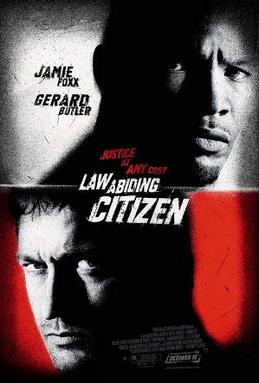
Law Abiding Citizen: There should be a hyphen between “Law” and “Abiding,” so it would be "Law-Abiding Citizen".

Inglourious Bastards: Now this one is intentional, but “Inglourious” is spelled wrong, it should be "Inglorious Bastards".
The sections on using "that or which” and “who or whom” in the “What you don’t know...” section of the reading are useful to me. Those two things always confuse me and I stop and think about which one to use. I probably get it wrong most of the time. Now I know “who” is always the subject and “whom” is the object. I also learned to use “that” in restrictive relative clauses and “which” in nonrestrictive relative clauses. Meaning use “that” for information that is necessary to the sentence and “which” for information that is unnecessary but useful to the sentence.
Here are some movie titles with poor grammar:
Who Framed Roger Rabbit: The title should have a question mark (?) at the end, so it would be "Who Framed Roger Rabbit?".
Law Abiding Citizen: There should be a hyphen between “Law” and “Abiding,” so it would be "Law-Abiding Citizen".
Inglourious Bastards: Now this one is intentional, but “Inglourious” is spelled wrong, it should be "Inglorious Bastards".
Monday, September 8, 2014
"-,Punctuation."?'
So there was more than one occasion during this module that I could've sworn that I was breaking out in hives. The reason being is that there are a lot of rules and necessary attention to detail when dealing with punctuation that it can get very confusing. I'm now even feeling very self-conscious about making this blog post because I don't want my punctuation to be completely off base for the whole class to see.
The comma alone had me all tripped up for a while. As a matter of fact, it still does. Did I even use it right in my previous sentence? I'll check the stylebook in a minute. One tip that helped right off the bat actually came straight from the punctuation PowerPoint about nonessential and essential phrases. I'm kind of looking at nonessential phrases as little bits and pieces of a sentence that can sort of be fenced off from the rest of the sentence. They're unnecessary but can provide a sort of beautification to the sentence, if you will. Think of it like this: if you have a really nice backyard with lush green grass, it's already good. But if you cut out a section of your lawn and curb in a real pretty flowerbed, it adds to the appeal. It's not really necessary, it's just supplemental to your already nice backyard. Check out Purdue's Online Writing Lab too, there's all kinds of goodies there.
Another thing that I found helpful is to say the sentence out loud and accentuate the punctuation in your speech. When you do this, and really pay attention to it, you can tell if what your saying is accurate to what you're seeing or writing. It's surprising what kind of a mess can be made of an otherwise appropriate sentence.
I looked all over to try and find an editing mistake in the news or professional print that I could make an example out of, but I just couldn't find one. I suspect that this might have been due to the fact that I was actively seeking an error. I've encountered them in the past, but it's usually just out of happenstance when I do.
The comma alone had me all tripped up for a while. As a matter of fact, it still does. Did I even use it right in my previous sentence? I'll check the stylebook in a minute. One tip that helped right off the bat actually came straight from the punctuation PowerPoint about nonessential and essential phrases. I'm kind of looking at nonessential phrases as little bits and pieces of a sentence that can sort of be fenced off from the rest of the sentence. They're unnecessary but can provide a sort of beautification to the sentence, if you will. Think of it like this: if you have a really nice backyard with lush green grass, it's already good. But if you cut out a section of your lawn and curb in a real pretty flowerbed, it adds to the appeal. It's not really necessary, it's just supplemental to your already nice backyard. Check out Purdue's Online Writing Lab too, there's all kinds of goodies there.
Another thing that I found helpful is to say the sentence out loud and accentuate the punctuation in your speech. When you do this, and really pay attention to it, you can tell if what your saying is accurate to what you're seeing or writing. It's surprising what kind of a mess can be made of an otherwise appropriate sentence.
I looked all over to try and find an editing mistake in the news or professional print that I could make an example out of, but I just couldn't find one. I suspect that this might have been due to the fact that I was actively seeking an error. I've encountered them in the past, but it's usually just out of happenstance when I do.
Sunday, September 7, 2014
Punctuation Chapter
Use of the comma is something that will likely take me a really long time to master. I have a bad habit of creating run on sentences in my writing that can contain a confusing amount of commas or not enough commas to clearly get my message across. Something that When Words Collide that is helping me to realize is the use of the comma with standalone phrases. I often find myself unsure whether to inject a comma in my sentence. Now I’m more conscious of looking over the components of the sentence to see if they can stand alone as a basis to determine if I need a comma. I really like to use commas because they allow for a lot of a lot of information in a single sentence that can still flow well. Unlike in verbal communication where a comma cannot be spoken and speech must be modified or use verbal pauses and clarification in place of what a comma could accomplish in writing.
Something new I learned from the AP Stylebook was related to acronyms. Before reading more about punctuation I was under the impression that acronyms such as FBI, CIA or NATO are properly written with periods in between the letter such as “F.B.I.” This can be a tricky thing to remember given that a lot of times such acronyms like K.G.B. that are not pronounced as a word, like NATO, are often seen with periods separate the letters. However, according to the Stylebook all these acronyms should be without periods.
Possessive apostrophe, for heaven' sake!
Through reading "When Words Collide," I
didn't expect to learn anything new, having been working with the AP Styleguide
and writing extensively for about five years. I was surprised to learn
that when using an apostrophe as part of a possessive noun, "If the next
word begins with s, add an
apostrophe only."
I use phrases like
"for goodness' sake" and "for heaven' sake" all the time
when speaking, but never when writing, so it hasn't ever crossed my mind to
think that "heaven's sake" looked funny.
I also have always struggled with apostrophes after an
s.
I remember from grade school the fact that there was a rule for them,
but I have always struggled remembering what it was. Apparently it’s not as difficult as I
thought; if there’s an s at the end
of the word, apostrophe only. Go
figure.
Now, I’m always on Facebook, and I like to think that
most of my friends are well-versed in the ins and outs of punctuation. So naturally, when I find a mistake, I
cringe. My uncle posted a picture of my
cousin and his friends the other day, after they had finished running the “Tough
Mudder” race where they live. The post
looked like this:

Now, I’m conflicted over his use of a comma in that
sense. I could argue that he is
referring to my cousin and his friends each as a “tough mudder,” but, honestly,
that feels like a stretch. I think he meant to say, “They just
finished running Tough Mudder!” At least
I hope that’s what he meant.
Ellipses Should Be Used Sparingly…
I don’t often use ellipses
in my writing, but I do notice it used a bit more frequently in other’s
writing. I have often suspected that
ellipses are overused and I was glad the textbook confirmed my suspicions. Taken from When Words Collide: “Ellipses should be used sparingly in
journalistic writing because they can raise reader suspicion about the
importance of the missing phrase and how it affects meaning. Also, too many ellipses can bleed energy away
from the content by forcing readers to follow the breaks” (Kessler and McDonald
120).
If used incorrectly or if
over-used, ellipses create unnecessary pause, and can also cause confusion in
the reader as well. For example, I found this sentence from a work email I
received this past Friday:
“Lastly, some inspiring
words to consider...especially if you've been feeling uninspired lately.”
I didn’t understand why
ellipses were used here, and even paused for a moment and re-read the sentence
a couple of times because I thought I had missed something. I think a better way to have typed this would
have been:
“Lastly, some inspiring
words to consider, especially if you’ve been feeling uninspired lately.”
Using a second comma in
the sentence helps it to flow more naturally while still holding on to the
desired emphasis, “…words to consider, especially…” The ellipses are not necessary to invite the
reader to consider or ponder anything, the natural transition into the word “especially”
and the subsequent phrase, will have that same affect.
Subscribe to:
Posts (Atom)